


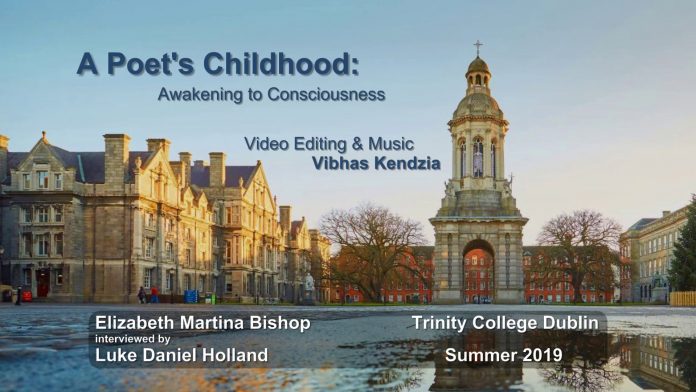
Directed by Vibhas P A Kendzia and Elizabeth Martina Bishop | Reviewed by Sabarno Sinha
It is perhaps on the rarest of occasions that a film reviewer
gets the fortune of watching poetry in film, something that
he finds lacking in a lot of movies and I am quite honoured
to have got the rare opportunity to review Bishop and
Kendzia’s latest production, A Poet’s Childhood:
Awakening to Consciousness. The 24-minute short is
an interview of the novelist, poet and academician Elizabeth
Martina Bishop, an American-born lady who has written poetry
since her childhood and currently resides in Dublin,
Ireland. She recently completed her MFA from the prestigious
Trinity College and the short film is an interview of this
charming and profoundly poetic soul who has led her entire
life immersed in the arts. The short begins with stock
footage of night-time at Dublin which resonates the beauty
that one can effortlessly perceive in the film. Bishop has
penned over 70 books and many of those are novels. For her,
the art of novel-writing is not so much as creating a
different world but rather extending an ongoing or past
conversation in paper. Such qualities make her books
gripping and relatable, undoubtedly. 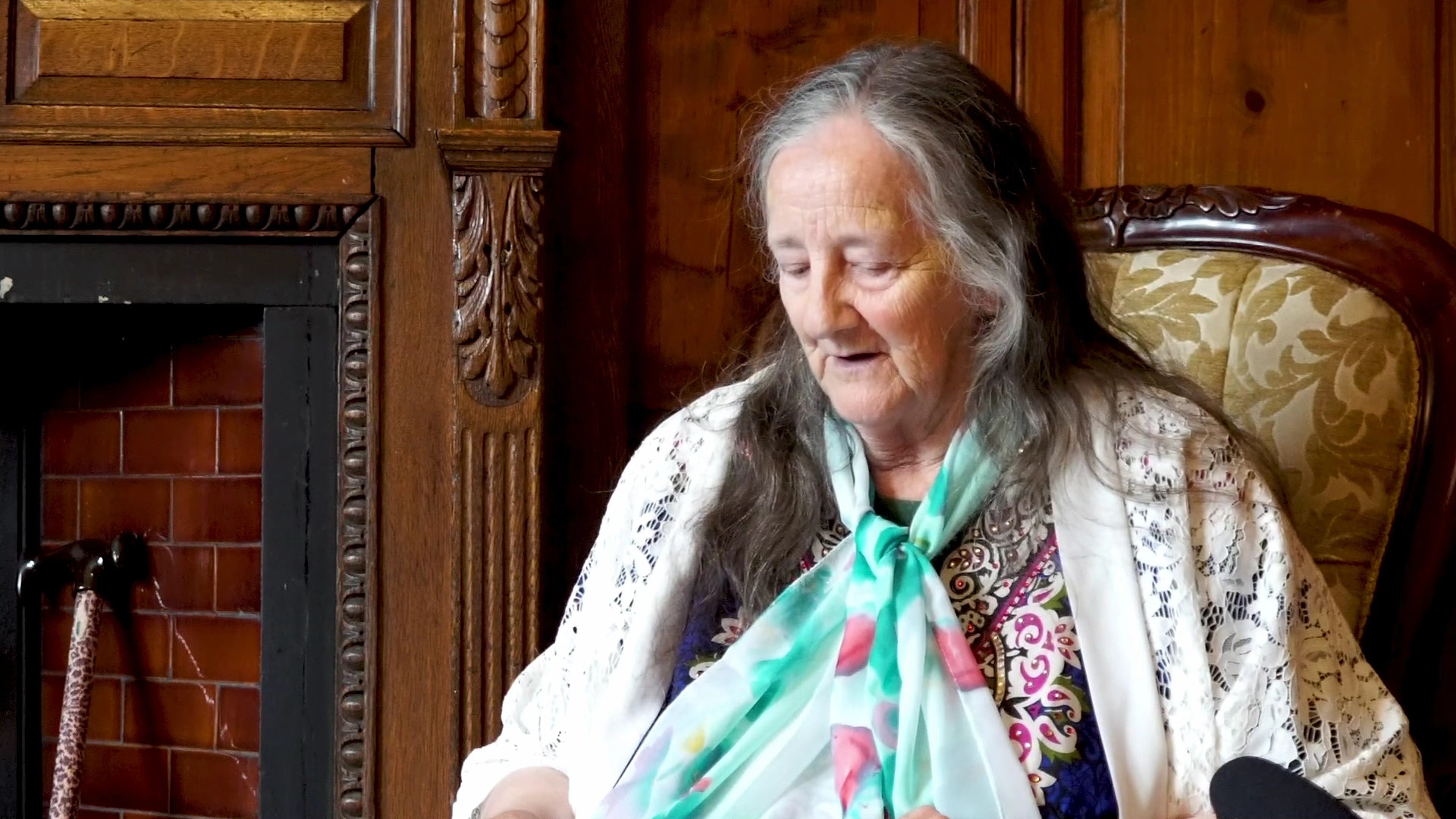 Bishop had
an exceptional childhood, to say the least. At the age of 5,
she had to sign a contract which stated that she would be
leaving her childhood home to stay with someone else. This
‘someone else’ turned out to be none other than the famous
Hollywood actress Jane Wyatt’s mother. The eccentric woman
led a life revolving around Shakespeare parties, balls and a
world that was reminiscent of Regency-era England. Bishop
remembers that she had to keep this entire affair a secret
at school as nobody was supposed to know about their
identity. Thus, when she tried writing about Jane and her
mother for her school magazine, they stopped her from doing
so and discouraged her from writing. This had been one of
the two reasons why she couldn’t write for a very long time.
Elizabeth had also suffered from dyslexia in her childhood.
She read and wrote backwards and during her time, teachers
weren’t sensitive to such psychological disorders and simply
thought that the students weren’t putting in a lot of
effort. Being an introverted child, she didn’t trust a lot
of people and every time she gave them a chance, she was
simply let down by others. This theme of mistrust and breach
of trust resounds in her poetry and I too could feel while
watching and listening to her reading out some of her poems,
especially “Anna”, that she had not been able to come out of
those nightmarish times and her only vent was poetry.
 The short
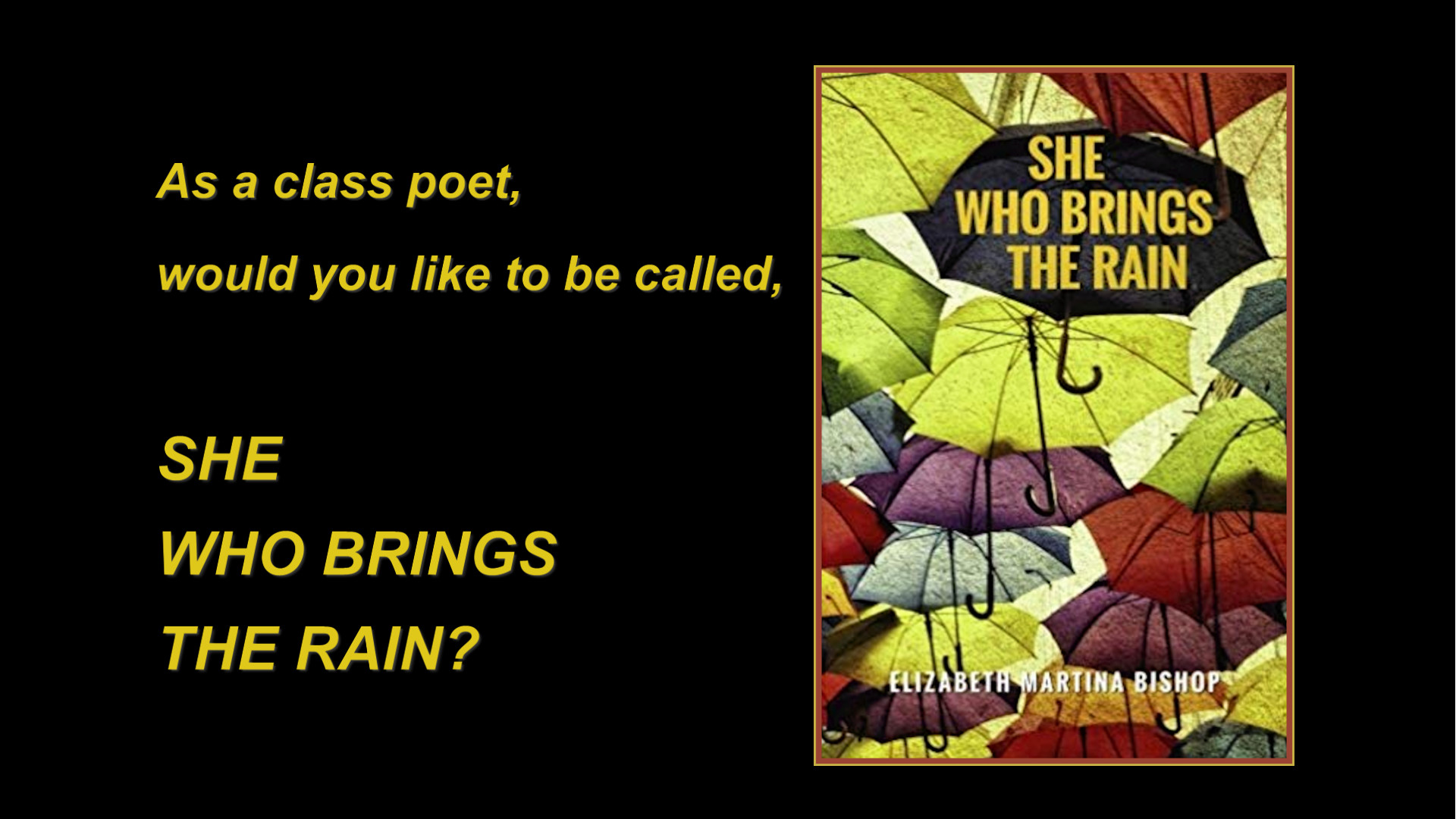
film takes the form of an interview, in which memories of
childhood are interspersed with poems that she wrote about
that time. The choice of poems is nuanced and listening to
Elizabeth read out her poetry, her emotions resurfacing as
she read, was an extremely emotional experience for me. The
only thing that would have made the entire scene truly
evocative are good visuals. If the directors decided to
present some photographs of Bishop as a child or other stock
footage related to childhood, seasons and other things that
Elizabeth talks about in her poetry, the entire sequence
would have been a visual treat alongside an aural one. It
would help the ordinary unpoetic viewer picture what
Elizabeth wanted them to imagine and experience when she
declaimed the beautiful lines from her poems. Even though
the natural ambient sounds are quite good, some sound
effects would also have made the experience of listening to
her poetry even more profound and memorable. Being a poet
and student of literature myself, I could visualise her
poetry well but I am not so sure whether others would be
able to do so without certain aids. The quality of editing
in the film has not been up to the mark. Elizabeth’s voice
is mellifluous and jarring cuts and shots of 2-3 seconds in
between longer ones only mar the experience of watching her
speak. Instead, subtler cuts, longer shots and transitions
such as fade and dissolve could have been used to make the
editing better. The lack of uniform transitions was also
unpleasant to the eye. Yet, for me, Elizabeth’s poetry
surmounts all of this and envelops the entire film with
warmth, hope and profundity and turns A Poet’s
Childhood to an indelible experience.
 Sabarno
Sinha is an undergraduate student of English at
Jadavpur University, Kolkata. He was active in the debating
and MUN circuit in Kolkata. Sabarno frequently writes short
stories, poems and screenplays for short films. A lover of
world cinema, Sabarno finds pleasure in watching
contemporary as well as classic films from Japan, Italy and
Germany among others.


How wonderful of you to review my film. I am overjoyed that you are a poet and like poetry. I understand and treasure the words you used to describe the film and also told me how it could be made so much better. I wanted to have a lot more editing done in the future and am set about now to do that–make music and images that reflect the ambiance of poetry. I hope that I can render up a more beautiful film that will carry the ambiance that reflects the art of poetry. I have to make new films that will communicate in adjunctive art forms a measure of what poetry can do to change how people feel about the world, the greater global community. I am so honored to receive your review. Elizabeth Bishop, Ph.D.
I thought the review a great comment on a film that has been the center of my attention for the past few years. I appreciate the care and concern you put into this review and enjoy your magazine. You capture the elements of the film and write an ninteresting critique. I am looking for some photos that will enhance the film and am developing a new script called “Grandmother Bird.”