


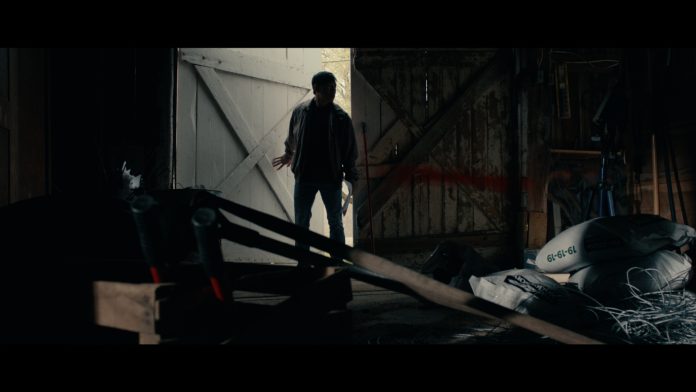
Directed by Xiwen Miao | Reviewed
by Rohan Bhattacharya
‘Cha,’ our society has familiarized itself with this monosyllabic East-Asian word for Tea. It has become a word that resonates with a multitude of emotions in the minds of Asians, Europeans, Americans, and other cultures alike. Tea has brought with itself a culture of togetherness and unity. Whether it be with your close family, or with strangers, sharing a cup of tea with people is never regretful. The title of Xiwen Miao’s short film greets us with the same warmth and tenderness; with the hope to witness a symphony of pleasant emotions. However, despite the title ‘Cha,’ we are greeted with a feeling that is oxymoronic, to the point that we are left heartbroken by the end of this hopeful journey.
 Miao’s
tasteful selection of shots sets a tone for his shortfilm
from the very first scene itself; the camera pans down from
a shot of bare, lifeless trees to the close up of a man
dressed in black. Miao greets us with a sense of melancholy
and loss, further overpowered by the apparent agony in the
man’s face; we are hence introduced to our main character,
Jiho (Thomas B. Tran). Not dwelling on the same shot for
long, the audience is then taken to a journey in the past
that tends to vividly explain the events that led to the
haunting melancholia that lingers throughout the film, but
blossoms only at the very end where we are brought back to
the very first scene in the film. Jiho and his grandmother
(Joy Sung Kim) are Koreans who have been living in the
United States of America for quite some time. Their lives
had been normal until the COVID-19 pandemic had had its way
with the world. The family of two runs a small
fruit-business; they celebrate each day with a cup of warm
‘Cha’ every evening. In what seems to be a life of
normality, Miao pushes in elements of conflict that set the
start of what brings about the sense of dread and
lifelessness that is visible at the introduction, and the
conclusion of Miao’s short film.
Both Jiho and his grandmother face racial discrimination in multiple instances throughout the short film; people tend to not purchase fruits from their shop because of how they look. Their property is vandalized by thugs in multiple instances which finally leads to something that breaks the character of Jiho at the very end. While Jiho is a rebellious young man, trying to find justice amongst people who seem to judge him based on his appearance and color, his grandmother is more accepting of what is happening to them; she believes that there is some good in this world, and we must not give up hope, as shown in the scene where she introduces her American friends to Jiho.
My favorite scenes are undoubtedly the ones where Jiho and his grandmother interact with each other over a cup of warm tea; that is where I believe the movie finds a link to the warmth in its title. The scenes showcase the spirit of togetherness in drinking tea with your loved ones, and how even in the most troubled times, a cup of tea when shared with the people who matter to you will always allow the bright light of the day to seep in and lighten up your heart. Aside from story-telling, I also like the choice of the color pallet; I believe that the color-grade greatly complimented the low-key lighting in the darker indoor shots, and the scenes shot at night. The tasteful use of natural light throughout the short film is a treat to the eyes. The sound design and the music add more life to the film.
When it comes to the cinematography, I believe what the film lacks significantly in is the number of b-rolls and close-ups used in the final edit. The consistent use of Point of View shots and OTS’s made the viewing experience less interesting. However, I absolutely loved the treatment of long-shots that were taken of the main characters beside the pond. All in all, I believe that Miao’s vision of a united world with less discrimination blossoms brilliantly throughout the film.
 Rohan
Bhattacharya is a video editor, filmmaker and
writer. His film Komorebi won the second prize in
‘South Asia Japanese Language Short Film
Competition,’ organized by The Japan Foundation, New
Delhi and his latest film “Tsubaki” has been
screened at the Tokyo Short Film Festival in Japan. His
production house Sunkaku Productions makes movies in
Japanese language to create a bridge of culture between
India and Japan.

