



Directed by Freddie Basnight | Reviewed
by Rohan Bhattacharya
Love is a word that knows no boundary. A feeling that transcends language, ethnicity, and every other socio-economic barrier created by humans to segregate one another. An emotion that connects souls who wish to find harmony in each other’s existence. Freddie Basnight’s short film, “Forbidden Love,” adds another layer to this familiar, yet mysterious word; the word becomes a personification of struggle, and the fight to stay together despite all odds. Devonte and Senamika were shown to be in a rather pleasant relationship for almost a couple of years, until one dreadful morning, when the latter was given a choice; they were thrown into an alien circumstance where their difference in ethnicity threatened to draw them apart. Basnight tries to showcase his interpretation of love, while battling a social issue that torments lovers even in this day and age. His dramatic presentation of a very real situation is truly commendable.
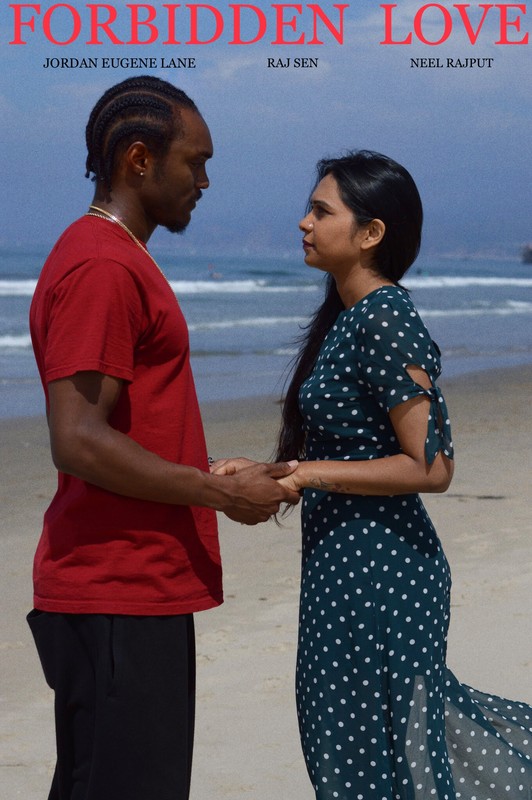 The
film starts off with a montage of pictures of both Senamika
and Devonte together, smiling, and holding each other close.
The audience is at once drawn into their world which at
first is nothing but colorful, radiating liveliness, and is
without a shred of malevolence or chaos. The music flows
with the montage; a composition on a major scale, but is
interjected with minor notes that seem to break the harmony
in the music, introducing an underlining sense of sadness
and vulnerability. We cut to a shot of their apartment
whereafter the title, “Forbidden Love” is shown in red. The
title lingers on the screen while we cut to a long shot of
Senamika getting ready for work. She too is wearing red.
Through the subtle use of colors, Basnight hints at Senamika
being the one that brings with her the sense of
forbidden-ness in their clear sense of love for one another.
While the room is spotless white, it is the title and
Senamika’s clothing that brings in the contrast.
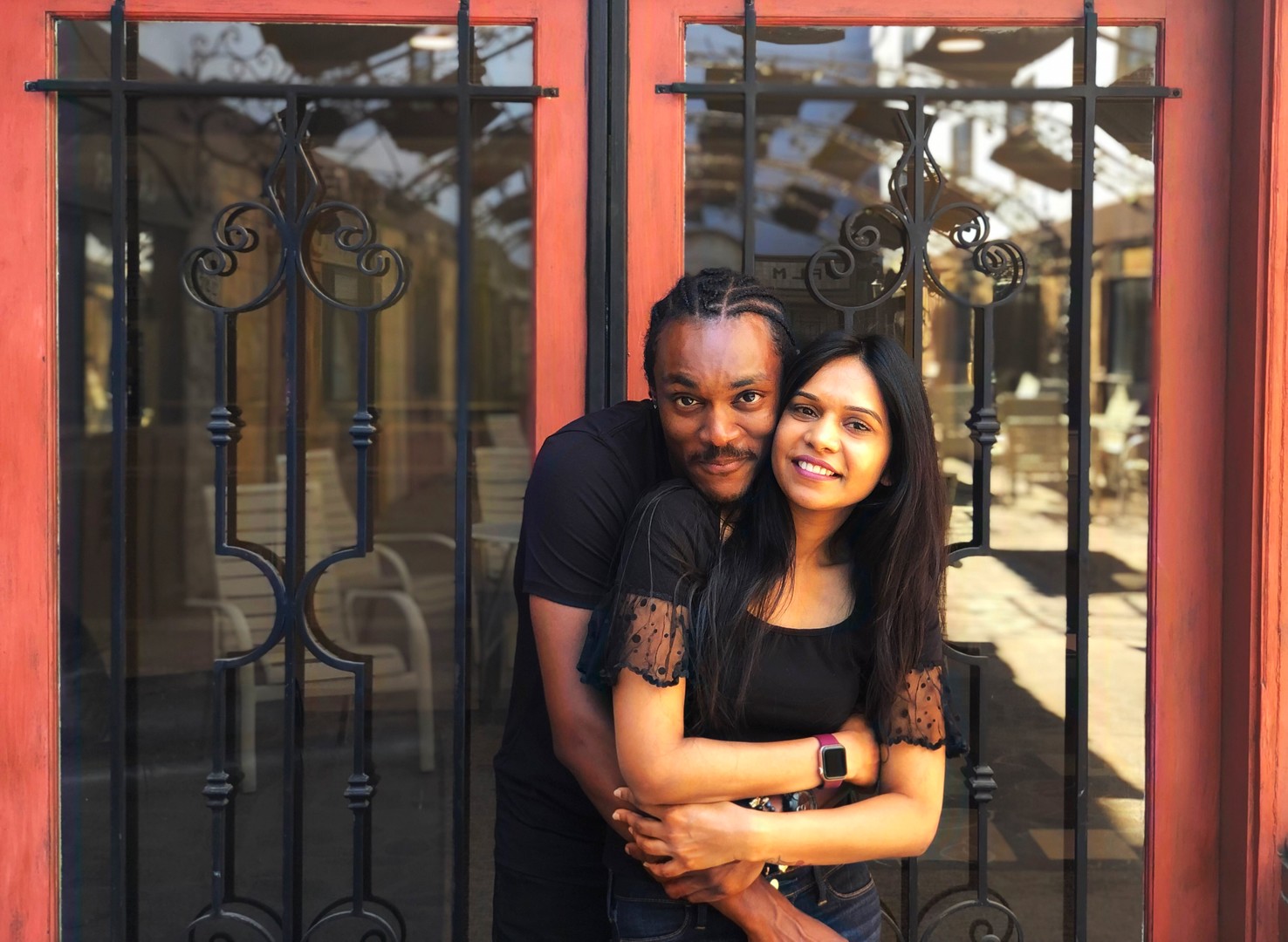 In
the proceeding shots, it is shown that Senamika’s parents,
after hearing that she was dating Devonte, an
African-American man, are in great shock. They wish for her
to return to India where they will force her to marry an
Indian man. Basnight’s study of South-Asian cultures is
apparent here; in countries like India, marrying into one’s
own caste is preferred by the older generation. Family plays
an extremely crucial role in the lives of most South Asian
individuals. Despite becoming adults, many youngsters in
South Asian countries need to heed their parents’ advice
when it comes to factors that may decide their future. The
director utilizes close shots to establish the closeness
between the couple; however, he shifts to using
over-the-shoulder shots as soon Senamika tells Devonte about
her parents. While Devonte wishes to live together with his
girlfriend, Senamika is confused, and cannot seem to choose
between her parents and Devonte. In my opinion, the use of
shots to showcase the growing distance between the couple is
one of the more fascinating aspects of this short film.
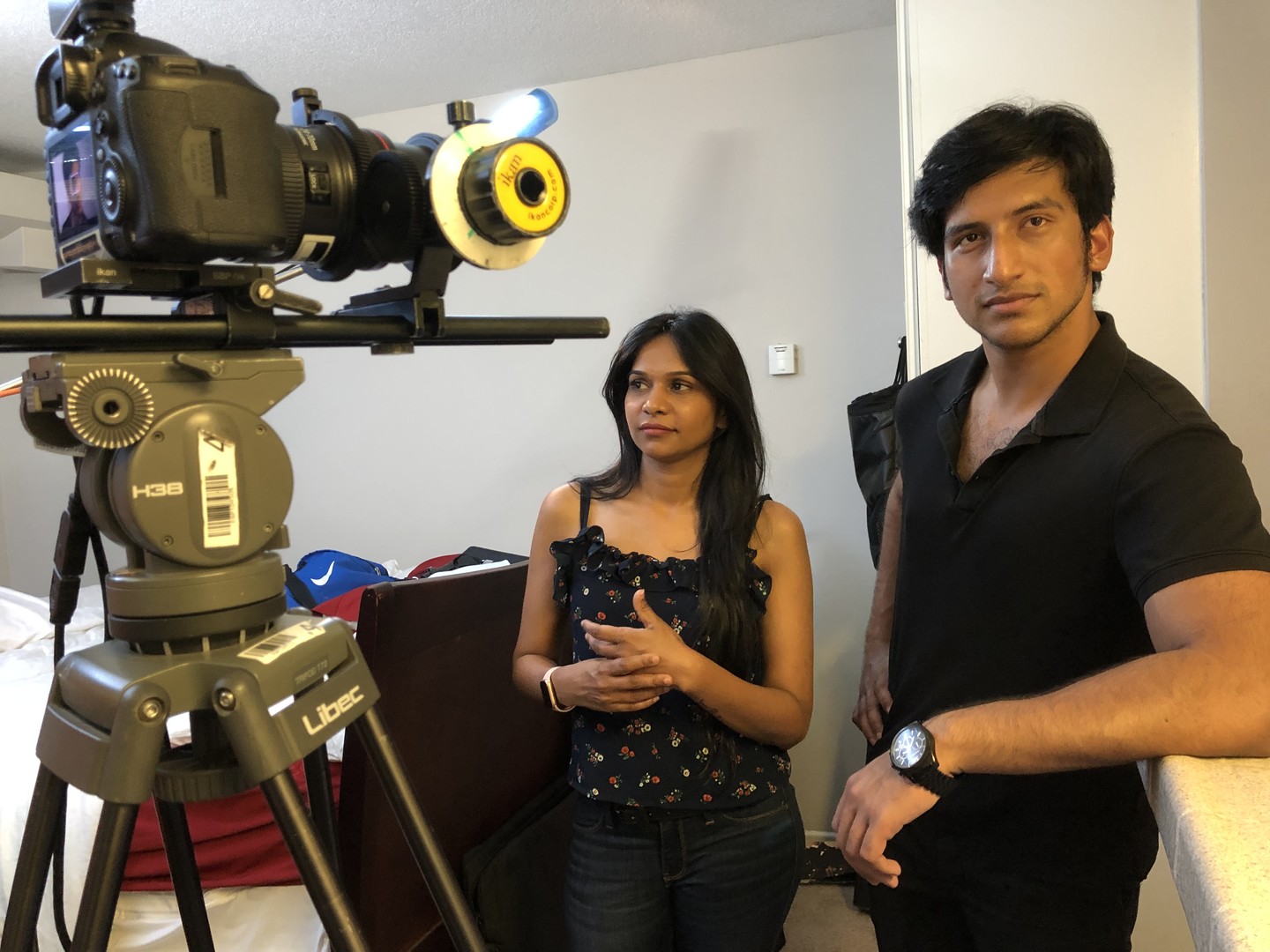 After
confronting Senamika’s brother, Devonte is left shaken.
Again, the confrontation between these two men of opposing
ideologies is done brilliantly with the use of well-placed
over-the-shoulder shots, accompanied by tastefully presented
closeups of our character’s faces. After a montage of what
felt like bytes from Devonte’s memories of the couple being
happy with one another, we reach the climax of the film,
where Devonte’s trauma surfaces, and is revealed to its
fullest. While it seems as if love had lost the battle here,
in the end, Basnight leaves the viewers confused, as
Devonte’s eyes are drawn outside his washroom. Maybe love
did win this battle after all?
Basnight’s smart choice of shots and colors added to the beauty showcased in “Forbidden Love,” However; I believe had the actors presented their emotions better, the film could have made a deeper impact. The cinematographer could have played with the lights and the shadows better to create more visual drama, adding to the aesthetics of the short film. Furthermore, the confrontation between the brother and Devonte could have been more intense with the right use of dialogue by the director.
 Rohan
Bhattacharya is a video editor, filmmaker and
writer. His film Komorebi won the second prize in
‘South Asia Japanese Language Short Film
Competition,’ organized by The Japan Foundation, New
Delhi and his latest film “Tsubaki” has been
screened at the Tokyo Short Film Festival in Japan. His
production house Sunkaku Productions makes movies in
Japanese language to create a bridge of culture between
India and Japan.

