


Directed by Jeffrey Smith Quizon | Reviewed
by Rohan Bhattacharya
“Strike the rock and water will come gushing out; then the people will be able to drink,” said the Abrahamic God to his prophet, Moses, who was leading his people to the promised land: a land of peace and harmony.
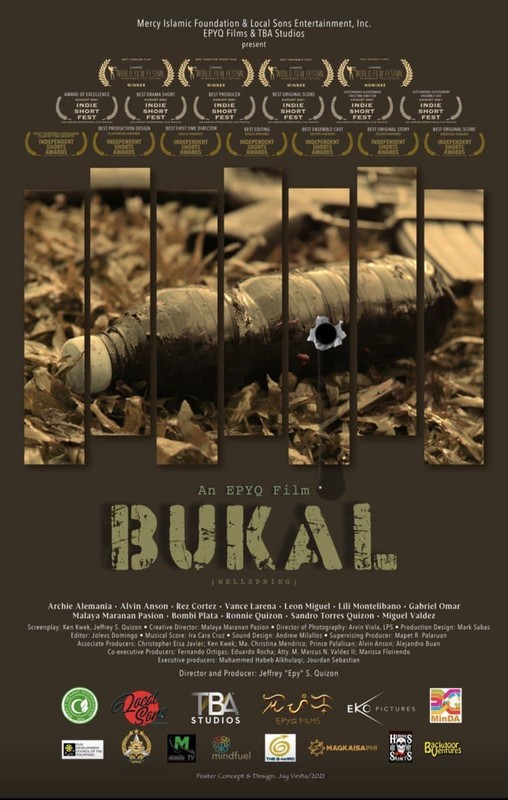
Jeffrey Smith Quizon’s debut Short Film, “BUKAL (WELLSPRING)” tackles more than just the issue of communal disharmony in the Philippines; within its 24 minutes and 41 seconds, the film encapsulates humanity’s conflict with the idea of peace, and how we tend to not have faith in each other. The movie starts with a shot of water as it pours down; truly a life-giving force. As the camera slowly tracks down the stream, the audience is then introduced to the first seed that brought an ever-lasting conflict between two social groups that could otherwise have lived together in harmony. The dead fish floating in the water creates an intense contrast with the introductory life-giving theme; I believe it is this sequence that captures the essence of the film brilliantly. The proceeding sequence is but a mirage spun together by weakening threads of wavering innocence; the audience is still kept under the shroud of mystery as we witness the brilliant smile of a mother feeding her child the water that was collected from the same stream.
 The audience
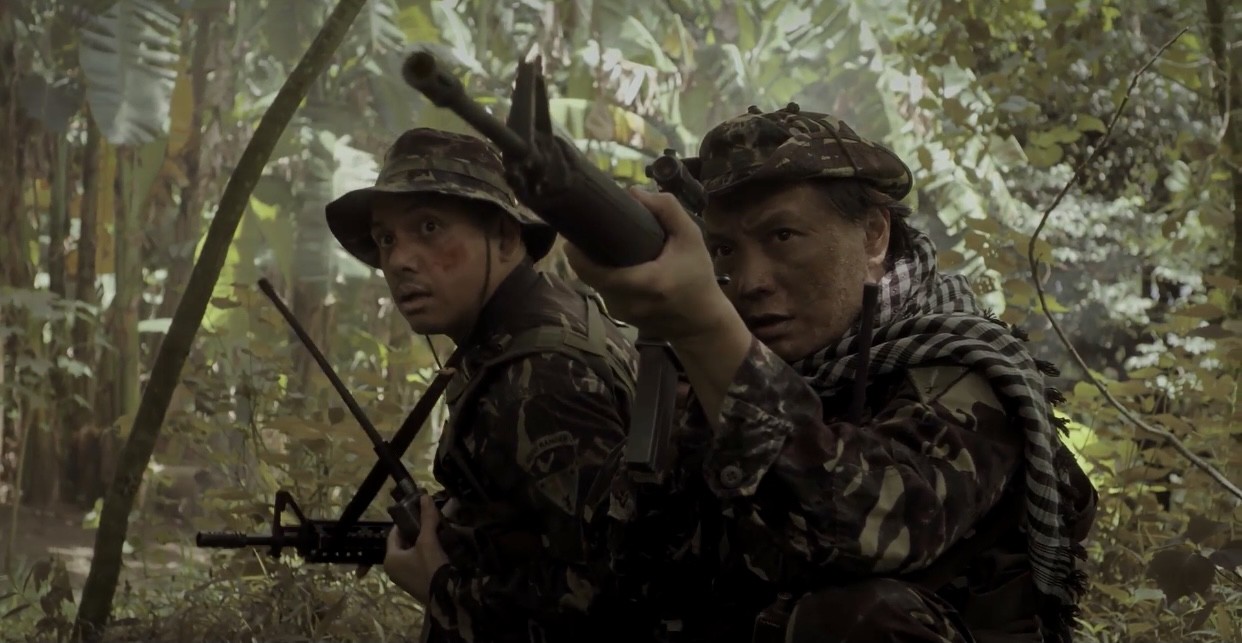
is then propelled into a battle scene; the ravages of war
showcased at its complete, monstrous obscenity. From a
sequence radiating innocence, we are plunged into bloodbath
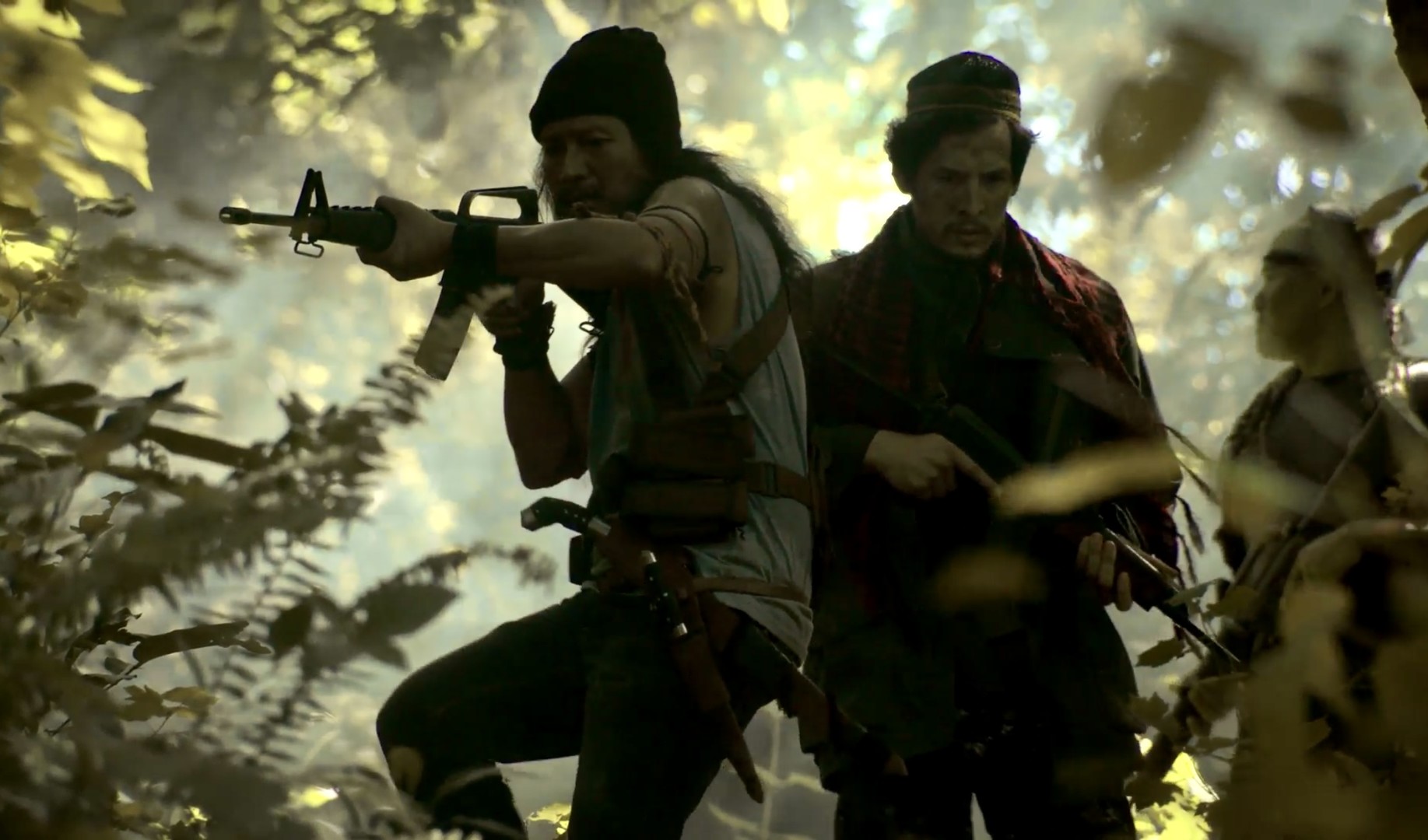
and devastation. Two factions (the Army, and Muslim Rebels)
seem to be at war with one another, trying to further
immiserate a historical conflict. With simple, yet effective
close shots and undeniably skillful acting, both the
director and the cast helped highlight the futility of war
and the conflict in their hearts. The distant calls of the
Islamic Azan are blended in with the cries of the innocent
who had lost their lives in this conflict of faith, while
the soldier in battle bends down and prays to his lord.
The director, with astounding perfection, captures the resolve in these soldiers; their desire to keep one another alive, and to create chaos amongst their enemies’ ranks is showcased beautifully. Fighting for days has left them broken; however, amidst all the chaos, we realize that there is a sense of brotherhood in them by the way they treat one another, and their fallen companions. While there is weakness in them, what is highlighted the most in these consecutive sequences is their thirst for water, and their sight set on one wellspring. With a sequence of intercutting dialogues, we realize that their goal is but one: “whoever controls the wellspring, controls the territory.” Water, a ‘life-giver,’ has been portrayed as a ‘life-taker’ in this scenario.
 What
fascinated me the most was a rather peculiar dream sequence
that takes us back to the mysteriously innocent beginning of
the film. The mother who was feeding her child discovers
that her baby had died in her arms. It is here that the
director established the reason behind the conflict; the
mother screams and begs for her child’s life, and we cut to
an old Muslim soldier who wakes up with shock and despair on
his face. From a man with love in heart, he becomes a tool
of war and destruction, driven solely by revenge. While in
both their ranks we see those who desire not to fight, we
are instantaneously pulled into the practical reality where
the blood-red cloak of revenge curtains the eyes of those
who once were innocent.
 The climax
undoubtedly justifies the quotations from The Bible at the
beginning of the film, when the futility of war is thrown
onto the minds that were shrouded by hatred; it is here that
brothers (Ali and Abel) attempted to kill one another, and
conflict, for at least a moment ceases to exist. God allowed
Moses to strike the rock once. A single sacrifice should
bring peace to humanity; however, senseless death will only
bring suffering. In my opinion, Quizon’s vision was finally
met when a Christian recites “La ilaha illallah” at his
final hour, showcasing that one must have faith in humanity
above all else.
 Rohan
Bhattacharya is a video editor, filmmaker and
writer. His film Komorebi won the second prize in
‘South Asia Japanese Language Short Film
Competition,’ organized by The Japan Foundation, New
Delhi and his latest film “Tsubaki” has been
screened at the Tokyo Short Film Festival in Japan. His
production house Sunkaku Productions makes movies in
Japanese language to create a bridge of culture between
India and Japan.


This review is a very interesting take on this film. I’d love to watch it once again.